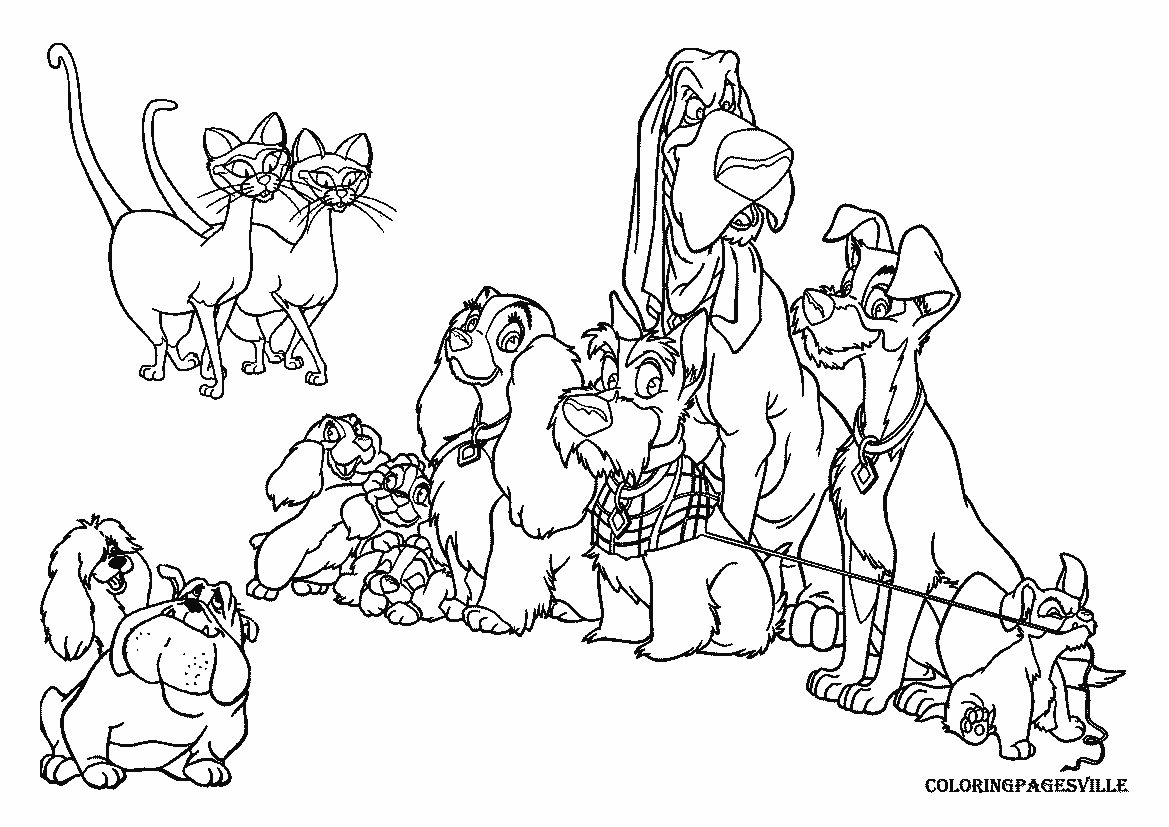
Lady and the Tramp coloring pages are featuring Lady, Tramp, Jock, Joe, Bulldog, Dachsie, Policeman, Trusty, Tony, Darling, Si, Am, Peg, Aunt Sarah, Boris and other characters from Disney's Lady and the Tramp animated film. Try to guess who is who.
Lady and the Tramp is the sort of film that, if it had been a book left on the backseat of a spaceship, might well have sparked a significant intergalactic inquiry into why anyone would want to study Earthlings at all. The film presents a universe where dogs—of all things—engage in more heartfelt dialogue and subtle expressions of romance than any known species of alien ever managed without the aid of either a supercomputer or a rather disorienting potion. But there it is: two dogs, Lady, a spoiled canine aristocrat and Tramp, a roguish vagabond, strut across the screen, wagging tails and whispering nothings into each other’s floppy ears with more sincerity than an entire boardroom of corporate sycophants. Children, it turns out, eat this sort of thing up.
Now, if this cinematic experiment has any deep messages hidden beneath the bowls of spaghetti and candle-lit alleyways, they likely concern kindness, or so one might assume from the way Lady looks at Tramp, as if she’s never seen a street dog with any personal integrity before. The film nods sagely toward the virtues of empathy and understanding, hinting that perhaps, just perhaps, little earthlings might do well to embrace these values instead of, say, pulling each other’s hair or engaging in various acts of “playground diplomacy.” After all, the movie proposes (or at least sniffs around the idea), differences are rather marvelous things if you don’t go about biting the other dog’s tail first.
Finally, the film, with all the subtlety of a firework at a funeral, suggests that life’s curious knack for springing surprises might not be entirely awful. Lady, it seems, must learn to cope with a brand new human pup, an invasion of her territory that she doesn’t at first take to like a duck to water—or even a dog to kibble. Yet, somehow, she manages and there’s a suggestion that resilience and adaptability might even lead to surprising happiness. To children, the film implies with a gentle wink, life is liable to toss new experiences at you whether you like them or not and you might as well face them with all the dogged enthusiasm of a mutt before a dish of bologna.
Lady and the Tramp is the sort of film that, if it had been a book left on the backseat of a spaceship, might well have sparked a significant intergalactic inquiry into why anyone would want to study Earthlings at all. The film presents a universe where dogs—of all things—engage in more heartfelt dialogue and subtle expressions of romance than any known species of alien ever managed without the aid of either a supercomputer or a rather disorienting potion. But there it is: two dogs, Lady, a spoiled canine aristocrat and Tramp, a roguish vagabond, strut across the screen, wagging tails and whispering nothings into each other’s floppy ears with more sincerity than an entire boardroom of corporate sycophants. Children, it turns out, eat this sort of thing up.
Now, if this cinematic experiment has any deep messages hidden beneath the bowls of spaghetti and candle-lit alleyways, they likely concern kindness, or so one might assume from the way Lady looks at Tramp, as if she’s never seen a street dog with any personal integrity before. The film nods sagely toward the virtues of empathy and understanding, hinting that perhaps, just perhaps, little earthlings might do well to embrace these values instead of, say, pulling each other’s hair or engaging in various acts of “playground diplomacy.” After all, the movie proposes (or at least sniffs around the idea), differences are rather marvelous things if you don’t go about biting the other dog’s tail first.
Finally, the film, with all the subtlety of a firework at a funeral, suggests that life’s curious knack for springing surprises might not be entirely awful. Lady, it seems, must learn to cope with a brand new human pup, an invasion of her territory that she doesn’t at first take to like a duck to water—or even a dog to kibble. Yet, somehow, she manages and there’s a suggestion that resilience and adaptability might even lead to surprising happiness. To children, the film implies with a gentle wink, life is liable to toss new experiences at you whether you like them or not and you might as well face them with all the dogged enthusiasm of a mutt before a dish of bologna.
Add comment