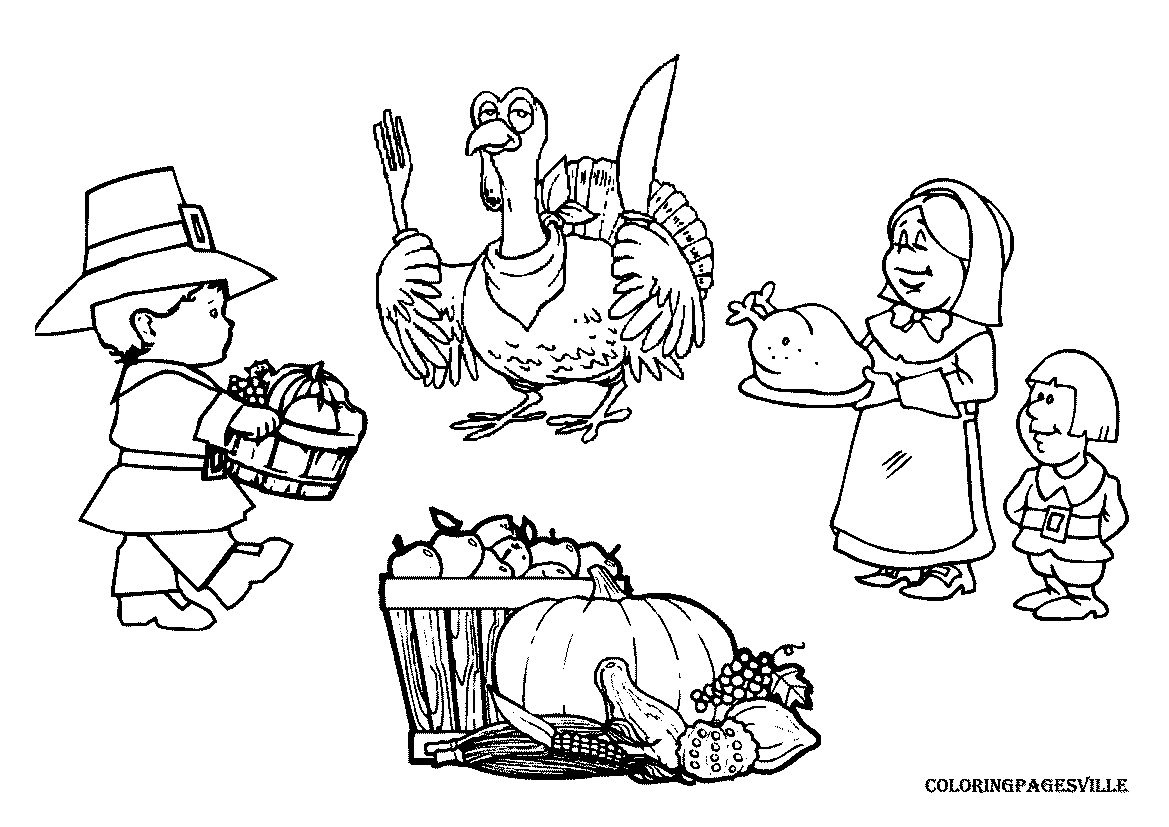
Thanksgiving Day, for reasons best left to historians or possibly philosophers, is a holiday that North Americans cling to with the same tenacity as a cat clinging to the top of a tree in a rainstorm. In Canada, it appears suspiciously early on the second Monday of October, presumably to catch the last gasp of reasonable weather before winter descends like a soggy, frozen blanket. In the United States, Thanksgiving turns up fashionably late on the fourth Thursday of November, when the autumn leaves have vanished and the general atmosphere suggests that everyone ought to be wearing thermal underpants. There’s a delicious irony in the fact that Canada’s Thanksgiving often coincides with Columbus Day in the United States—a day where one nation gives thanks for survival and another remembers a chap who got lost and bumped into America entirely by accident.
Thanksgiving is celebrated with a sort of collective culinary madness. Families, who might otherwise avoid each other for reasons too sensitive to mention, gather en masse to express their gratitude for things like pie and surviving one another’s company for yet another year. It’s a special holiday, primarily because it’s special in the sense that it actively tries to teach children lofty concepts like gratitude, as if a seven-year-old’s greatest revelation in life is not that their annoying cousin has yet again licked the last spoonful of whipped cream. Gratitude, you see, involves kids momentarily reflecting on things they like, such as family, friends, or the inexplicable joy of bouncing on furniture. Through activities like making gratitude lists—which usually include bizarre items like “dogs, dinosaurs and spaghetti”—the younger generation learns to be thankful, all while wondering when the desserts are coming.
In addition to gratitude, Thanksgiving sprinkles in a hefty dose of empathy and historical musings. It’s a holiday full of curious contradictions: families volunteering at food banks, while simultaneously consuming vast quantities of stuffing and cranberry sauce. Kids are encouraged to empathize with others, learn about acts of kindness and momentarily pause to realize that not everyone has a three-layered pumpkin pie. History lessons, if they’re attempted, range from mildly accurate stories about the original feasts to tales that become more mythical with every retelling, usually involving turkeys as some kind of ancient noble creatures. All of this makes Thanksgiving a whirlwind of cultural significance, where children are exposed to the virtues of giving, historical ambiguity and a spirited—if not entirely sincere—attempt at understanding why we celebrate in the first place.
Thanksgiving is celebrated with a sort of collective culinary madness. Families, who might otherwise avoid each other for reasons too sensitive to mention, gather en masse to express their gratitude for things like pie and surviving one another’s company for yet another year. It’s a special holiday, primarily because it’s special in the sense that it actively tries to teach children lofty concepts like gratitude, as if a seven-year-old’s greatest revelation in life is not that their annoying cousin has yet again licked the last spoonful of whipped cream. Gratitude, you see, involves kids momentarily reflecting on things they like, such as family, friends, or the inexplicable joy of bouncing on furniture. Through activities like making gratitude lists—which usually include bizarre items like “dogs, dinosaurs and spaghetti”—the younger generation learns to be thankful, all while wondering when the desserts are coming.
In addition to gratitude, Thanksgiving sprinkles in a hefty dose of empathy and historical musings. It’s a holiday full of curious contradictions: families volunteering at food banks, while simultaneously consuming vast quantities of stuffing and cranberry sauce. Kids are encouraged to empathize with others, learn about acts of kindness and momentarily pause to realize that not everyone has a three-layered pumpkin pie. History lessons, if they’re attempted, range from mildly accurate stories about the original feasts to tales that become more mythical with every retelling, usually involving turkeys as some kind of ancient noble creatures. All of this makes Thanksgiving a whirlwind of cultural significance, where children are exposed to the virtues of giving, historical ambiguity and a spirited—if not entirely sincere—attempt at understanding why we celebrate in the first place.
Add comment